
 OR Business
Predictive modeling helps match resources with needs
Perioperative services is the key driver of a hospital’s performance. More than 68% of better performing hospitals’ revenue comes from perioperative services, and 60% of their margin is derived from the OR, according to Alecia Torrance, MBA, BS, RN, CNOR, senior vice president of clinical operations, Surgical Directions, Chicago. One…
Five-step process provides framework for managing supplies
Problems such as frequently running out of critical items, expired inventory, and secret stockpiling in the OR have become increasingly burdensome for surgeons, nursing staff, and hospital administration across the country. Wasteful supply chain spending marginalizes patient care and drives OR expenses out of control. “When the facility’s difficulties in…
US News ranks best hospitals
Editor's Note US News & World Report has posted its honor roll of the 15 best hospitals for 2015 to 2016. Honor roll hospitals scored near the top in at lease six specialties. Boston’s Massachusetts General Hospital returned to the top spot this year after being second last year. The…
Efficient health information exchange could significantly lower costs
Editor's Note Including a health information exchange query into emergency department patient care could significantly reduce the number of tests ordered and reduce costs, finds this study. Efficient health information exchange was associated with a 52% reduction in lab tests and a 36% reduction in radiology exams per patient ordered…
CMS, AMA announce efforts to help with transition to ICD-10
Editor's Note In less than 3 months, healthcare providers will switch from ICD-9 to ICD-10 coding for medical diagnoses and inpatient hospital procedures. To help providers get ready for the October 1 deadline, the Centers for Medicare & Medicaid Services is releasing additional guidance that will allow for flexibility in…
Aetna to buy Humana for $37 Billion
Editor's Note Aetna Inc has agreed to buy rival health insurer Humana Inc for $37 billion in cash and stock, creating the second-largest provider of health insurance in the US. The Affordable Care Act has spurred mergers by introducing rules that push insurers to look for savings. Humana’s 3.2 million Medicare…
New ACS Interactive Web Tool Helps Surgeons Avoid Medicare Penalties
Editor's Note The American College of Surgeons has launched a new web tool to help surgeons navigate and succeed in Medicare’s mandatory quality programs: Physician Quality Reporting System, Electronic Health Record-Meaningful Use, and Value-Based Modifier. Surgeons who do not successfully participate in these programs in 2015 could face up to…
Cincinnati hospital unveils $6M operating room
Our Take The University of Cincinnati Medical Center invested $6 million to upgrade an OR into a hybrid OR for heart and vascular procedures. The cost was about three times the cost of a non-hybrid OR. The 854 sq ft room includes $2.6 million in equipment and advanced medical imaging devices.…
Cost data comparisons help sway surgeons to standardize supplies
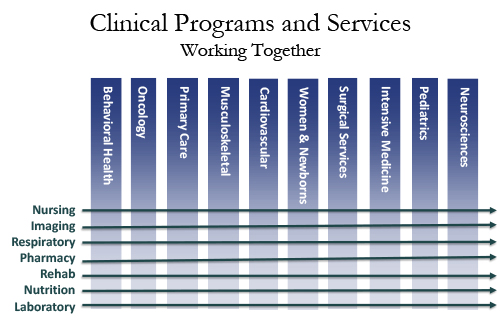
As payment models move from fee-for-service to value-based care, hospitals and healthcare systems are trying to reduce spending by 20% to 30% to maintain their budgets. Supply costs are usually the second largest expense after labor, and industry analysts predict they will take the top slot by 2020. In 2013,…
Hospital accreditation options expand beyond Joint Commission
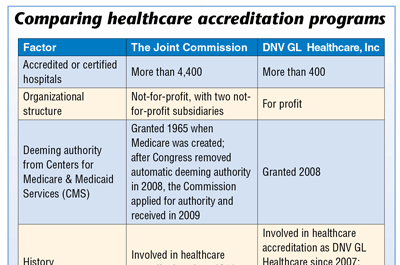
In the past, most hospitals automatically sought accreditation from the Joint Commission, but recent years have brought new players to the field, prompting hospital administrators to rethink that strategy. One relatively new player is DNV GL-Healthcare (DNV GL). Since achieving deeming authority from the Centers for Medicare & Medicaid Services…
 Free Daily News
- Lehigh Valley Health Network opens third 'neighborhood hospital'
- Analytics firm shares data and insight about shrinkage of inpatient-only list
- Duluth, Minn., legislators call on hospitals to 'establish protections' for patients and staff against ICE
- City shuts off Georgia hospital’s water supply due to unpaid bills
- Indiana Hospital Association warns of members’ mounting financial difficulties, calls for legislative action
- Toronto clinic looks to prevent delirium in high-risk patients
- OBL-centered perspective on the 2026 ASC Final Payment Rule
- ASCA's Kara Newbury breaks down 2026 CMS Final Rule, discusses 2027 initiatives
- Analysis: Hospital credit rating activity ‘moderates’ in 2025
- Survey finds use of unauthorized ‘shadow AI’ tools running rampant in health care