
 OR Business
Relationship between bariatric surgery outcomes and Medicare expenditures
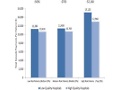
Editor's Note Medicare payments for bariatric surgery are significantly lower at hospitals with low complication rates, and cost savings are most prominent in patients at highest risk for complications, this study finds. The analysis of 38,374 bariatric surgery patients found a strong correlation between complication rates and episode payments−hospitals in…
Racial disparities in surgical mortality narrowing
Editor's Note Despite concerns that quality improvement efforts may widen disparities, national racial disparities in surgical mortality are narrowing, this study finds. Using Medicare claims data from 2005 to 2014, Harvard researchers found that, overall, national mortality trends improved for both black and white patients by 0.10% and 0.07% per…
Physician practice ownership drops below 50%
Editor's Note For the first time, less than half of physicians have an ownership stake in their practices, according to a study by the American Medical Association. Surgical sub-specialties have the highest share of physician owners (59.3%), followed by radiology (56.3%). Emergency medicine has the lowest share of owners (27.9%)…
AHRQ releases stats on outpatient, inpatient surgeries
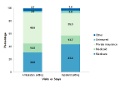
Editor's Note According to statistics from the Agency for Healthcare Research and Quality (AHRQ), in 2014, 17.2 million hospital visits (inpatient and outpatient) included surgical procedures. More than half (57.8%) occurred in a hospital-owned outpatient surgery setting, and the remaining (42.2%) were inpatient. Private insurance was the primary payer for…
Study: QI measures reduce readmissions, cost savings vary
Editor's Note Quality improvement (QI) measures can be effective in reducing readmissions, relative to the status quo, but cost savings vary, this meta-analysis finds. In this review of 50 QI studies, interventions reduced readmissions by an average of 12.1% for heart failure patients and 6.3% among the general population. However,…
ECRI Institute issues free resource on ransomware attacks

Editor's Note The ECRI Institute (Plymouth Meeting, Pennsylvania) on May 25 issued a free public resource to protect hospitals from ransomware attacks. The new guidance, “Ransomware Attacks: How to Protect Your Medical Device Systems,” provides recommendations for adapting general cybersecurity principles to the requirements of medical devices, including a list…
Mortality lower at teaching hospitals
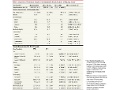
Editor's Note In this study, major teaching hospital status was associated with lower mortality rates for common medical and surgical conditions, compared with nonteaching hospitals. The analysis of 21.4 million hospitalizations of Medicare patients at 4,483 hospitals (250 major teaching, 894 minor teaching, and 3,339 nonteaching) found that 30-day mortality…
Effect of early discharge after surgery on costs
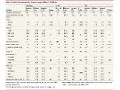
Editor's Note Early postoperative discharge after major inpatient surgery was associated with lower total surgical episode payments in this study. In this analysis of 639,943 Medicare beneficiaries undergoing colectomy, coronary artery bypass grafting (CABG), or total hip replacement, payments were significantly lower in hospitals with lowest vs highest length of…
Artificial disc market poised for growth
Editor's Note A GlobalData analysis predicts the US artificial disc replacement market will double by 2023, reaching $614.5 million, with a compound annual growth rate of 12.2%, the May 17 Becker’s Spine Review reports. The growth is a result of the increasing number of degenerative spine conditions and the advantages…
AHRQ: Surgical procedures performed in hospital outpatient vs inpatient settings
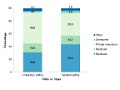
Editor's Note In 2014, 58% of the 17.2 million hospital-based surgical procedures took place in outpatient settings, according to a report from the Agency for Healthcare Research and Quality (AHRQ). The report, which helps to quantify ongoing shifts to more outpatient surgical procedures, found that the most common outpatient procedures…
 Free Daily News
- Duluth, Minn., legislators call on hospitals to “establish protections” for patients and staff against ICE
- City shuts off Georgia hospital’s water supply due to unpaid bills
- Indiana Hospital Association warns of members’ mounting financial difficulties, calls for legislative action
- Toronto clinic looks to prevent delirium in high-risk patients
- OBL-centered perspective on the 2026 ASC Final Payment Rule
- ASCA's Kara Newbury breaks down 2026 CMS Final Rule, discusses 2027 initiatives
- Analysis: Hospital credit rating activity ‘moderates’ in 2025
- Survey finds use of unauthorized ‘shadow AI’ tools running rampant in health care
- Stay Connected: Important Updates to Our Emails
- Inside three rural hospitals in crisis