
 Orthopedics
Orthopedic PSH a prime model for value-based care--Part 1
Uncertainties pepper the healthcare landscape, but the shift to value-based care is expected to continue, even though momentum may slow under the current administration. That means perioperative services leaders must continue to explore new care delivery options such as the perioperative surgical home (sidebar, p 17). “The demand for value…
Joint Commission: Four new performance measures for total joint certification

Editor's Note Four new performance measures are available for the Joint Commission’s Total Hip and Total Knee Replacement (THKR) advanced certification program, the Joint Commission announced on July 5. They are: THKR-1 Regional anesthesia THKR-2 Postoperative ambulation on the day of surgery THKR-3 Discharged to home THKR-4 Preoperative functional/health status…
Study characterizes ED visits after total joint procedures
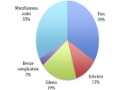
Editor's Note Emergency department (ED) visits after total joint procedures were numerous and mostly for pain-related diagnoses, and Medicaid patients had almost double the risk of an ED or pain-related ED visit, this study finds. Of 152,783 patients analyzed, 3.42% returned to the inpatient setting and 5.81% visited the ED…
Ambulatory services market to grow 5.8% by 2024
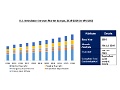
Editor's Note The global ambulatory services market was valued at $2.3 trillion in 2016 and is forecast to grow to $3.7 trillion by 2024, according to a new study by Ameri Research. In 2016, primary care offices accounted for the majority of market share at more than 48% because they…
New guideline targets total joint infections

Editor's Note The American College of Rheumatology (ACR) and American Association of Hip and Knee Surgeons (AAHKS) have released a new guideline to help reduce postoperative total hip and knee infections through the perioperative management of antirheumatic medications. Among the recommendations: Discontinuing biologic therapy before surgery in patients with inflammatory…
Safety of PACU discharge without motor function assessment after spinal anesthesia

Editor's Note Discharge from the postanesthesia care unit (PACU) without assessment of lower limb motor function after spinal anesthesia for total hip or knee arthroplasty did not increase length of hospital stay or readmissions but significantly reduced time in the PACU (0.40 vs 1.56 hours), this study finds. This multicenter…
Predicting transfusions in total joint patients

Editor's Note Using patient-specific preoperative variables, a validated logistic regression model predicted transfusions in total hip and knee patients in this study. The model identified preoperative hemoglobin, total hip arthroplasty, and females 65 years of age and older as predictors of perioperative transfusions. The model also may help identify those…
Interhospital comparison of orthopedic SSIs

Editor's Note Deep surgical site infection (SSI) rates in orthopedic surgical procedures may be a better tool for interhospital comparisons than overall SSI rates, this study finds. Researchers in Finland analyzed infection surveillance data for 73,227 total hip arthroplasties and 56,860 total knee arthroplasties performed in 18 hospitals from 1999…
Meta-analysis ranks efficacy of pain management modalities for total knee

Editor's Note The combination of femoral and sciatic nerve blocks is the overall best approach to pain management after total knee arthroplasty, finds this meta-analysis. The best five modalities for pain at rest were: femoral/obturator, femoral/sciatic/obturator, lumbar plexus/sciatic, femoral/sciatic, and fascia iliaca compartment blocks. For reducing opioid consumption, the best…
Total hip improves 5-year QOL outcomes

Editor's Note Total hip replacement patients experience meaningful and lasting improvement in quality of life (QOL) through at least 5-years after the procedure, this study finds. The analysis included 188 total hip replacement patients at seven hospitals who were evaluated with a standard quality-of-life assessment, called the “Short Form 36,”…
 Free Daily News
- CoxHealth launches construction of pediatric outpatient care center, including ASC
- Methodist Richardson Medical Center opens on-campus ASC
- ASC coming to adjacent Florida Coast Medical Center medical office building
- Jupiter Medical Center, Hospital for Special Surgery team on orthopedic care in South Florida
- Press Ganey announces 2025 Human Experience Award recipients
- Group of experts petition WHO to advocate for universal respirator use in health care
- Duke study links stress to poorer surgical recovery outcomes for older adults
- NAPA expands Bon Secours anesthesia relationship via Mary Immaculate Hospital deal
- BayCare previews new children's hospital to open in 2030
- Accreditation 360: Adjustments and opportunities