
 Ambulatory Surgery
ERAS patients are prescribed fewer postdischarge opioids
Editor's Note This study by researchers at the Massachusetts General Hospital, Boston, finds that patients participating in an Enhanced Recovery after Surgery (ERAS) program were prescribed significantly fewer opioids at discharge, compared to patients before ERAS was instituted. A total of 3,983 patients were included (1,929 pre-ERAS and 2,054 post-ERAS).…
FDA issues warning letters to endoscope manufacturer
Editor's Note The Food and Drug Administration (FDA) on January 10 announced that it had recently issued two warning letters to Olympus Medical Systems Corporation and one of its subsidiaries, Aizu Olympus Co, Ltd, after facility inspections. The letters addressed violations related to medical device reporting (MDR) requirements and quality…
Effect of state order curtailing elective surgery on volume during COVID-19
Editor's Note This study from the University of Michigan, Ann Arbor, finds that the introduction and removal of Michigan’s executive order curtailing elective surgery during COVID-19 lagged behind the ramp-down and ramp-up of elective surgery volume. Hospitals had already achieved a 91.7% reduction in case volume before the executive order…
The Joint Commission raises healthcare equity standard to NPSG
Editor's Note The Joint Commission on January 10 announced that it had elevated the Leadership (LD) Standard LD.04.03.08, which addresses healthcare disparities as a quality and safety priority, to a National Patient Safety Goal (NPSG), effective July 1, 2023. Current requirements for accreditation will not change, and the intent behind…
Study: Patient perceptions of surgeons linked to color of scrub attire
Editor's Note This study from the University of North Carolina at Chapel Hill finds that scrub color is a valuable identification tool, and it is associated with patients’ perceptions of surgeons. An electronic survey was administered to patients and visitors at the University of North Carolina Medical Center in Chapel…
Effect of liberal preop fasting policy on fasting duration and patient well-being, safety
Editor's Note This study, led by researchers at the University Medical Center Utrecht in the Netherlands, finds that a liberal preoperative fasting policy allowing adults scheduled for general anesthesia to drink clear fluids until arrival in the OR was associated with reduced fasting duration and improved patient well-being with regard…
Comparison of postop opioids prescribed by APCs vs surgeons
Editor's Note This study from the University of Michigan Medical School, Ann Arbor, finds that postoperative opioid prescriptions written by advanced practice clinicians (APCs), defined as nurse practitioners and physician assistants, had higher total dosages compared with those written by surgeons. A total of 628,197 surgical procedures involving 581,387 adults…
ASC challenge: Recruiting and retaining surgical technologists

According to the 2022 OR Manager Salary/Career Survey, many ambulatory surgery centers (ASCs) are facing a critical shortage of surgical technologists (STs). The percentage of leaders reporting an increase in the number of ST open positions jumped from 22% in 2020 and 28% in 2021 to 42% in 2022, and…
Tackling internal objections to single-use device reprocessing
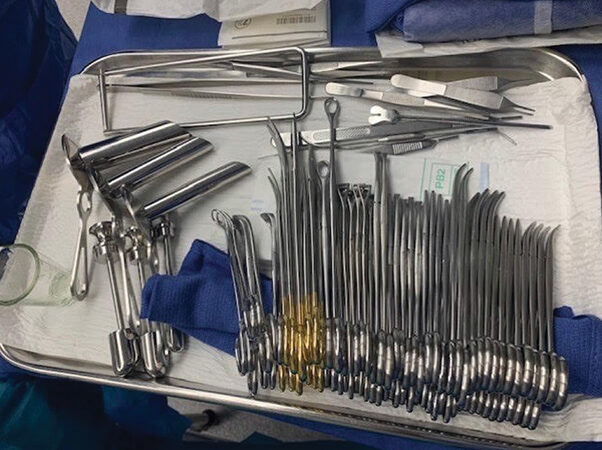
Many healthcare professionals are aware of single-use device reprocessing and its benefits. According to the Association of Medical Device Reprocessors, the savings generated by such programs can strengthen a facility’s financial sustainability and help provide a path for more responsible environmental stewardship. Sometimes, ambulatory surgery centers (ASCs) may experience situations…
Legal ABCs of drafting contracts with anesthesia

Navigating contracts with anesthesia when anesthesiology services are suffering from workforce shortages and high costs is often tricky and complex. The biggest mistake ambulatory surgery centers (ASCs) make is that they do not know what they want when entering a contract negotiation with an anesthesia provider. As a result, ASCs…
 Free Daily News
- Stay Connected: Important Updates to Our Emails
- Inside three rural hospitals in crisis
- Navajo Nation’s Sage Memorial Hospital performs first surgery in 20 years
- Inside Cleveland Clinic’s robotically assisted mitral valve repair program
- UNMC team finds new protocol ‘significantly’ improves perioperative monitoring of diabetic patients
- Report: University Health expanding presence at South Texas Medical Center
- Study finds public has conflicting views on state licensure of internationally trained surgeons without U.S. residency
- Community Health Systems sells Crestwood Medical Center to Huntsville Hospital Health System
- Cleveland Clinic’s Main Campus begins scheduling Saturday elective surgeries
- ECRI lists its Top 10 Health Technology Hazards for 2026