 Safety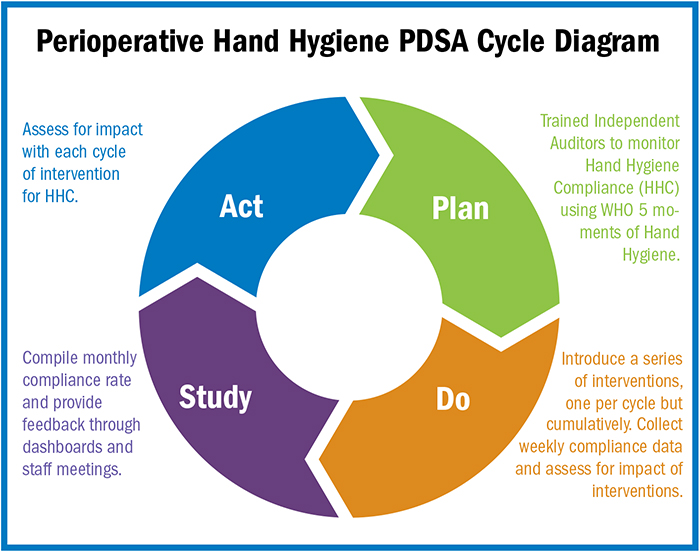
It is often said that small actions lead to big results. This so happens to be the case with hand hygiene compliance (HHC) in healthcare. Imagine a simple act, like washing hands, cutting infection rates by half—hospital-acquired infections (HAIs) and surgical site infections being reduced simply by improving handwashing behaviors.…
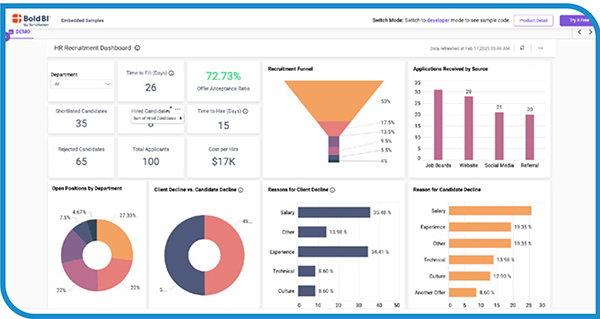
Takeaways • HR dashboards facilitate tracking key performance indicators related to recruitment, retention, and staffing needs. • HR dashboard data facilitate planning for current operations as well as new endeavors. • Elements of a successful HR dashboard include capability to determine users’ needs, to filter data in multiple ways, and…

Takeaways • The prevalence of needlesticks and other sharp object injuries to OR team members is 42.8%, an increase of 16% over the past decade. • New research and perspectives are shaping the discourse around sharps safety, such as new and expanded evidence-based practices presented in AORN’s 2025 update to…

Health systems are fundamentally capital intensive. They are regulated; depend on highly educated, high-cost employees; and operate under complex reimbursement structures. Investing in new technologies and infrastructure upgrades is imperative to keeping up with the latest medical advances. But what happens when capital funds are insufficient or no longer available?…

Reduced costs, faster recovery, and other advantages can make outpatient surgical procedures more convenient for providers and patients alike. Ambulatory surgery centers (ASCs) are incredibly safe, but a lot of work goes into infection control. Cross-trained staff often wear many hats, and limited budgets may not leave room for dedicated…

From sharps and blood-soaked surgical instruments to discarded anesthetic agents, biohazardous waste from ORs can threaten human health and the environment. In addition, failure to adhere to regulatory requirements can result in significant fines. However, the volume and diversity of biohazardous waste can create challenges with managing this material. Mitigating…

Starting a new job can be stressful for anyone, but nursing comes with a particular set of pressures. A 2024 survey of 6,000 nurses from the American Nurses Association (ANA), in partnership with McKinsey and Company, found that an astonishing 45% of early-tenure nurses reported they were somewhat likely to…

A wave of policy and regulatory changes is shaking up the healthcare industry—among many other markets. Like the COVID-19 pandemic greatly sped up the proliferation of ambulatory surgery centers (ASCs) by bringing traditional hospital operations to a standstill, ASCs are again on the poise of another boom. Medical innovation abounds…

The idea that “you can take the nurse out of the OR, but you can’t take the OR out of the nurse” is not new. And yet, a recent panel discussion among emerging nurse leaders indicates this old adage rings truer today than ever. Speaking at the 2024 OR Manager…

Takeaways • Although the central tenets of value-based healthcare have not changed, in many cases implementation has been reduced to little more than reducing costs, to the detriment of clinicians and patients. • The right incentives, such as recognition and work support, can effectively inspire clinicians to deliver high value…


