 Safety
In any OR, a combustible combination of personalities and stressful situations can set off a chain of reactions that can at best lengthen surgeries or hurt feelings and at worst jeopardize patient safety and outcomes. As a board-certified neurosurgeon at Longstreet Clinic in Gainesville, Ga., Betsy Grunch, MD, FAANS, FACS,…

When it comes to treating chronic pain—or pain associated with surgery—clinicians are always looking for alternatives to opioids. “There are zero advantages to chronic opioid use,” says Earl Kilbride, MD, MHA, an orthopedic surgeon at the Austin Orthopedic Institute. While the US makes up about 4.4% of the global population,…

Pinpoint accuracy in surgical technique has advanced beyond what many ever thought possible. Unfortunately, such refinements have been slower to reach the perioperative business front. OR leaders often rely on vague metrics and educated guesses to guide their teams. Ambient artificial intelligence (AI) is changing that. When integrated with data…

Takeaways • Determining the return on investment (ROI) for a robot-assisted surgery (RAS) program should include anticipated surgeon volume and past cases where RAS could have been used. • Some organizations dedicate staff to RAS cases, while others orient all to these procedures. • Offering ROI after hours require careful…

Artificial intelligence (AI) has made inroads into nearly every area of healthcare. With nursing shortages continuing—marked by the loss of some 100,000 nurses following the COVID-19 pandemic and projected deficits of 20% or more in some states—AI-based tools that improve access to information, streamline efficiency, monitor patients, track procedures, and…
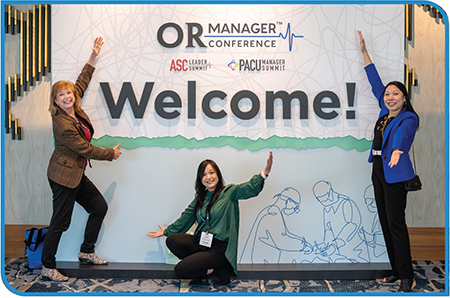
It is with great excitement that we welcome you to the 2025 OR Manager Conference, taking place October 28–30 at the Anaheim Convention Center in California. This year’s event is a celebration of leadership, innovation, and collaboration across perioperative leadership, and we are thrilled you are here to be part…

Robotic surgery has moved from cutting-edge to commonplace. The question is no longer whether to use robotics but when to introduce it and how to ensure adoption is efficient, affordable, and seamless for surgical teams. Ambulatory surgery centers (ASCs) are increasingly adding robotics to their service lines, driven by the…

Stress and burnout are more than workforce concerns; they are patient safety issues. Research shows a clear correlation between healthcare provider stress and medical errors. For instance, Zabin et al, a 2023 systematic review, confirmed that job stress negatively influences patient safety culture. Garcia & Abreu et al, a separate…
Perioperative leaders face a workforce transition unlike any in recent memory. By 2030, all baby boomers will have reached retirement age, and many veteran perioperative nurses are already exiting, taking with them decades of institutional knowledge. At the same time, the expectations of today’s workforce have shifted, placing greater value…

The centralization of medical device processing to one facility is becoming more prevalent. Centralizing sterile processing activities reduces expenses while concentrating expertise. However, this also introduces new concerns. When sterile processing is located within the same building where instrumentation is used, transport occurs over smooth floors in a controlled environment…


