
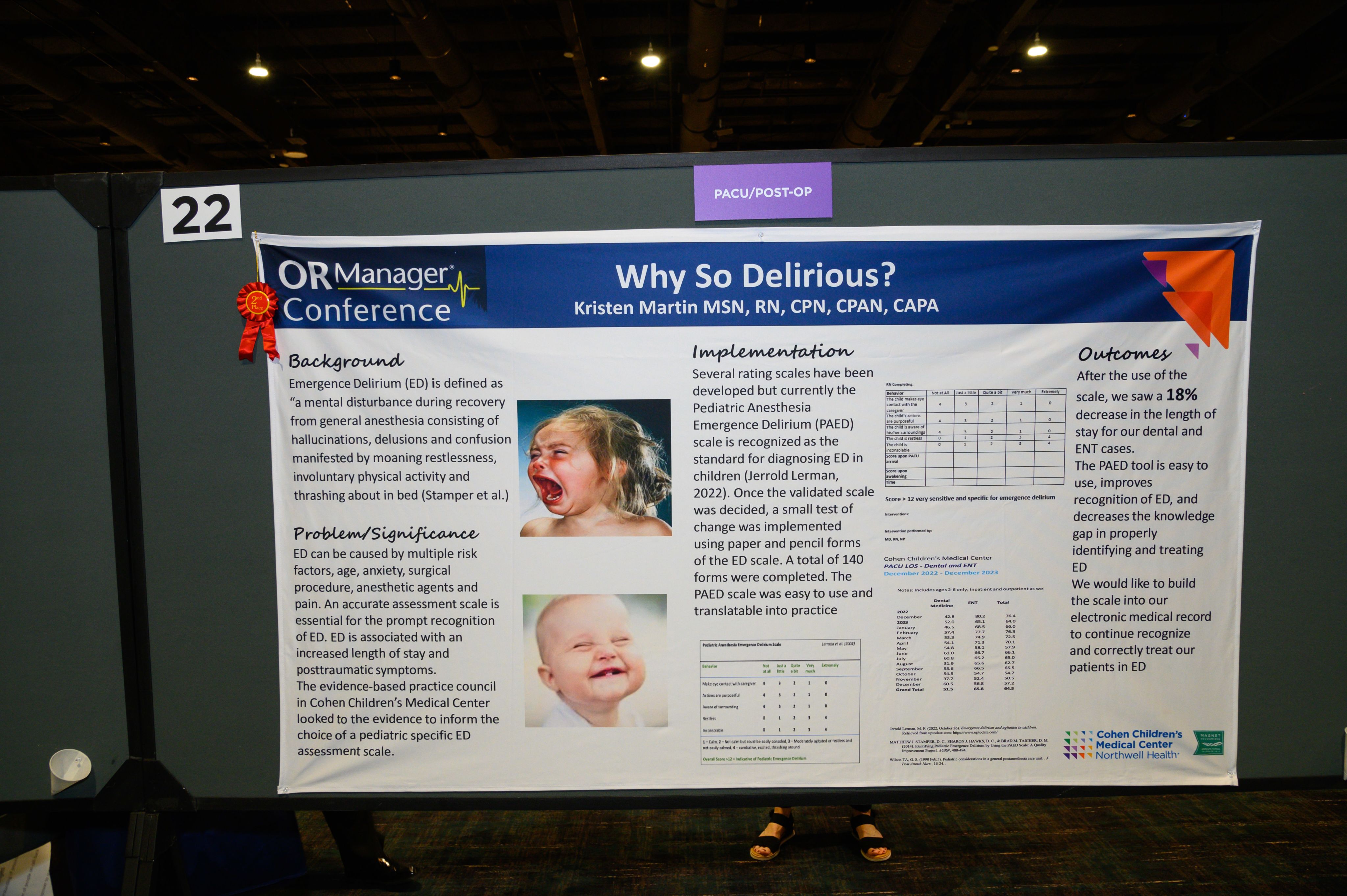
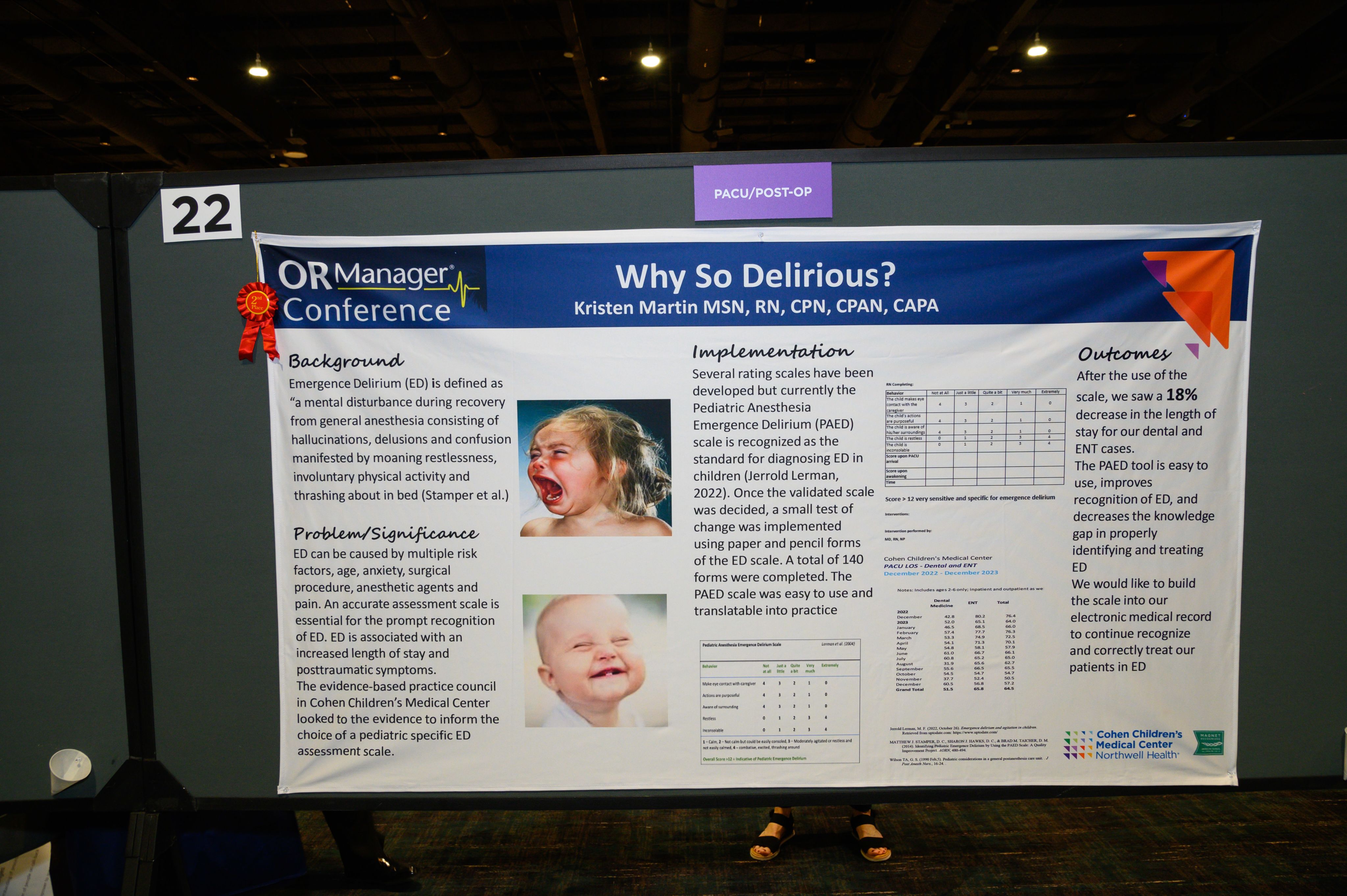
Why So Delirious?

Background

Emergence Delirium (ED) is defined as “a mental disturbance during recovery from general anesthesia consisting of hallucinations, delusions and confusion manifested by moaning restlessness, involuntary physical activity and thrashing about in bed (Stamper et al.)"


Problem/Significance

ED can be caused by multiple risk factors, age, anxiety, surgical procedure, anesthetic agents and pain. An accurate assessment scale is essential for the prompt recognition of ED. ED is associated with an increased length of stay and posttraumatic symptoms. The evidence-based practice council in Cohen Children’s Medical Center looked to the evidence to inform the choice of a pediatric specific ED assessment scale.

 

Implementation

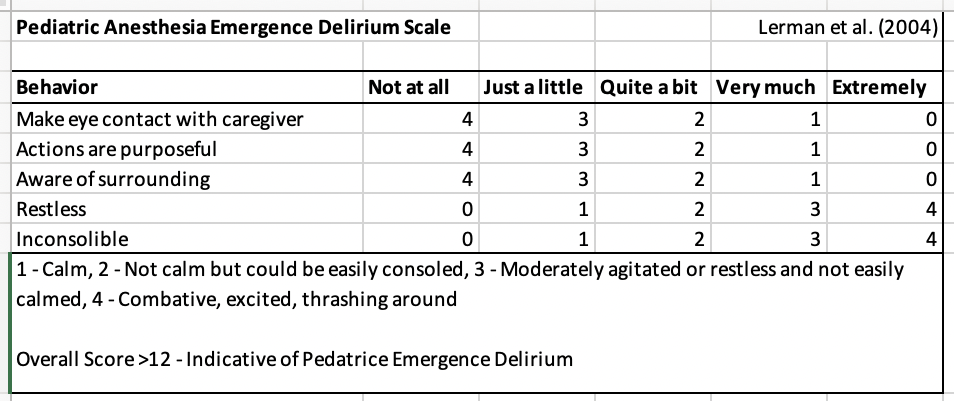
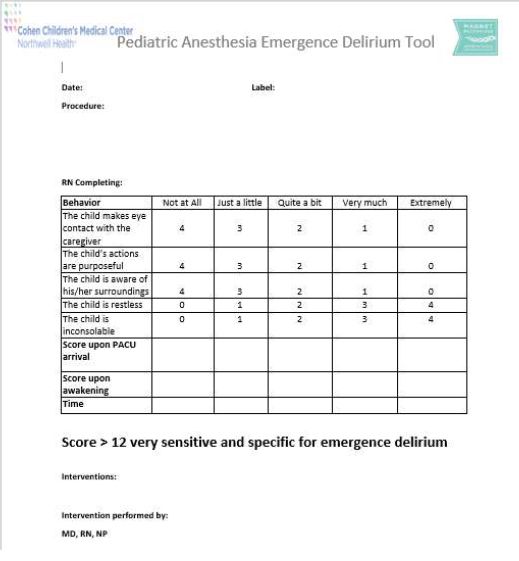
Several rating scales have been developed but currently the Pediatric Anesthesia Emergence Delirium (PAED) scale is recognized as the standard for diagnosing ED in children (Jerrold Lerman, 2022). Once the validated scale was decided, we completed a small test of change using paper and pencil forms of the ED scale. The PAED scale was easy to use and translatable into practice.


Outcomes

The PAED tool is easy to use, improves recognition of ED, and decreases the knowledge gap in properly identifying and treating ED. After the use of the scale, we saw a 18% decrease in the length of stay for our dental and ENT cases. We would like to build the scale into our electronic medical record to continue recognize and correctly treat Jerrold Lerman, M. F. (2022, October 26). Emergence delirium and agitation in children. our patients in ED.


References

Jerrold Lerman, M. F. (2022, October 26). Emergence delirium and agitation in children. our patients in ED Retrieved from uptodate.com: https://www.uptodate.com/

MATTHEW J. STAMPER, D. C., SHARON J. HAWKS, D. C., & BRAD M. TAICHER, D. M. (2014). Identifying Pediatric Emergence Delirium by Using the PAED Scale: A Quality Improvement Project. AORN, 480-494.

Wilson TA, G. S. (1990 Feb;5). Pediatric considerations in a general postanestheisa care unit. J Post Anesth Nurs., 16-24.


Presented at:

OR Manager Conference second place poster winner highlights assessment tool to mitigate postanesthesia delirium risks

The poster presentations at the 2024 OR Manager Conference showcased exceptional perioperative initiatives, highlighting advancements and innovative practices. From streamlining documentation and optimizing billing processes to ensuring patient and staff safety in postanesthesia settings, the posters selected last year showed the ingenuity and dedication of healthcare professionals committed to excellence in perioperative care.

This year’s second place poster winner, presented by Kristen Martin, MSN, RN, CPN, CPAN, CAPA, was an initiative to address pediatric emergence delirium (ED) by implementing the Pediatric Anesthesia Emergence Delirium (PAED) scale to improve early recognition and treatment. ED, characterized by confusion and agitation postanesthesia, can extend length of stay and cause post-traumatic symptoms. A pilot test using paper forms demonstrated the PAED scale's ease of use and reliability. Outcomes included an 18% reduction in length of stay for dental and ENT cases and improved identification of ED. Future plans involve integrating the PAED scale into the electronic health record (EHR) for sustained use.

Q: What sparked the interest and need for this initiative? 

Martin: We frequently encountered pediatric patients waking up wild in ED. I had an anesthesiologist give a presentation about ED and she said there were multiple scales to use as an assessment for this. We had not used any at the time.

Q: Can you share details of the pilot?

Martin: The nursing staff at the children’s hospital saw that a PAED scale was needed to improve the effectiveness of early recognition of the signs of ED. We did a literature review—several rating scales have been developed for the diagnosis of ED to differentiate ED from postoperative pain and to allow accurate assessment of prevalence, predisposing factors, and prevention and treatment strategies.

Once the validated PAED tool was selected, the Nursing Shared Governance Unit Council first completed a small test of change (STC), using paper and pencil forms of the ED tool to determine the clinical utility on our unit and to establish inter-rater reliability. The results of the first STC identified the PAED tool was easy to use.

Q: What was the process of getting multiple stakeholders on board?  

Martin: We presented the project at our shared governance council meeting that is attended by nursing staff, leadership, and anesthesia. I was able to get a specific anesthesiologist, nurse, and leader to assist in the project.

Q: What are the big takeaways from this initiative?

Martin: The PAED scale is easy to use and improves recognition and treatment response time. Application of the PAED scale in the postanesthesia care unit improves health outcomes for this highly specialized patient population. The initiative decreases the existing knowledge gap in properly identifying, treating, and preventing pediatric ED.

Q: What's next?

Martin: We would like to build the scale into our EHR to continue to recognize and correctly treat our patients in ED.